6 min read
SEO vs Google Ads: Which Should You Actually Be Spending Money On?
 Written byThomas FitzgeraldFounder, Your Digital Team
Paid mediaPublished 15 Apr 2026
It is one of the most common questions we get asked by business owners who are trying to grow online and are not sure where to put their budget.
The honest answer is: it depends. But that is not a cop-out. There is a logical way to think through this that most agencies will not walk you through — usually because they only offer one of the two services and have an obvious incentive to steer you toward it.
We offer both. So here is the unbiased version.
What You Are Actually Buying With Each
Before comparing them, it helps to be clear about what each one does.
Google Ads puts your business at the top of search results for specific keywords, immediately, in exchange for a fee per click. The moment you fund a campaign, your ads can appear. The moment you stop paying, they disappear. You are renting visibility.
SEO earns your business a position in the organic search results through technical work, content, and authority-building. It takes time to produce results, but once those results are there, they are not costing you per click. You are building an asset.
Neither is inherently better. They are different tools with different time horizons, risk profiles, and return patterns.
When Google Ads Is the Right Answer
You need customers now
If your business has an immediate revenue need — you have just launched, you are heading into a busy season, or you need to fill a gap quickly — Google Ads can deliver traffic the same day a campaign goes live.
SEO cannot do that. If someone tells you otherwise, they are lying to you.
Your product or service has strong buying intent
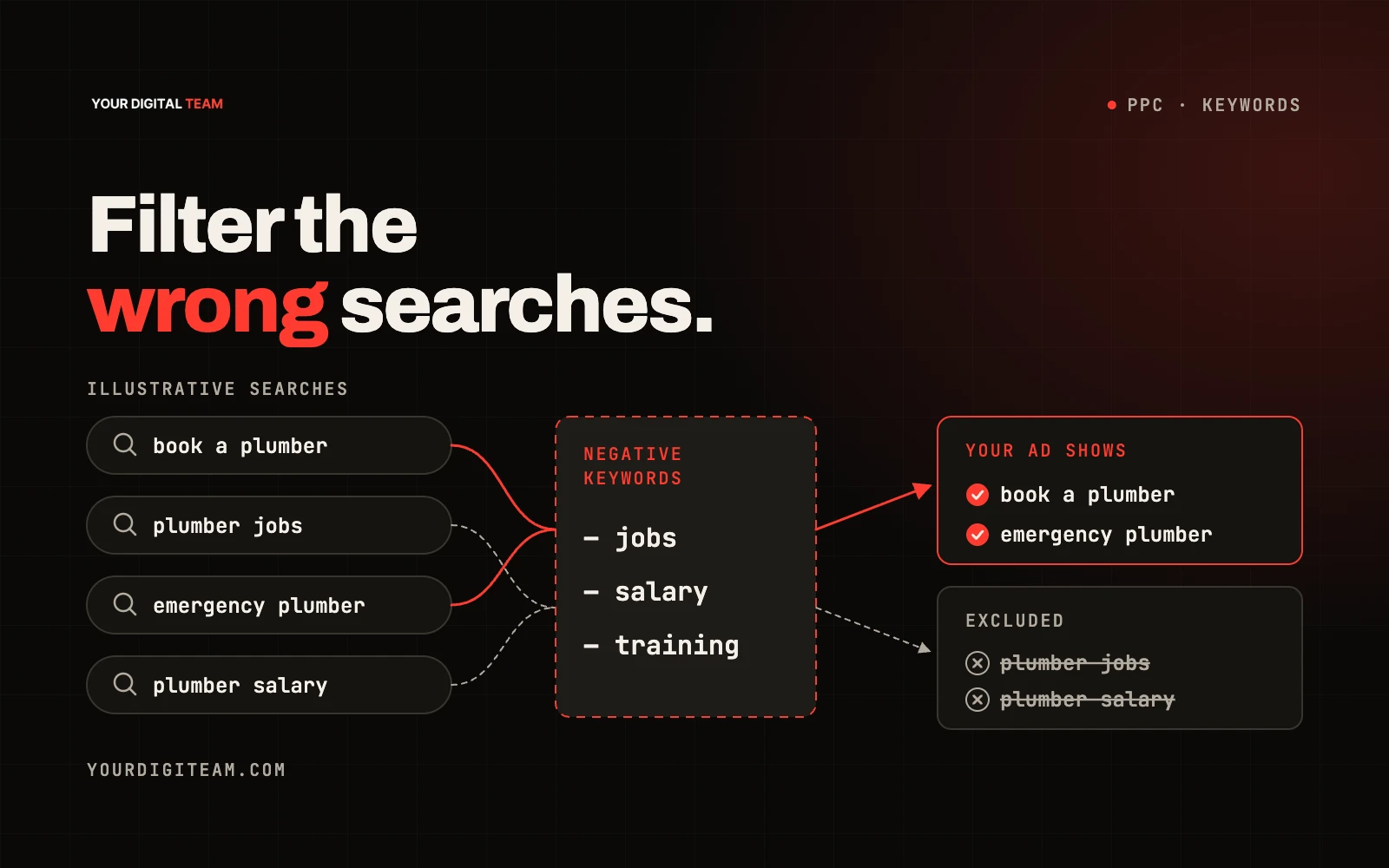
Some searches are incredibly high-intent. Someone typing "emergency boiler repair Leeds" or "solicitor for conveyancing near me" is ready to spend money. Paid ads capture that demand immediately and convert well.
If you operate in a space where people search specifically for what you offer at the point of decision, ads can be extremely effective.
You want to test before you invest
Google Ads is a useful proving ground. You can run campaigns on specific keywords, see what converts, and gather real data about what your customers are actually searching before you commit to an SEO strategy targeting those same terms.
This is actually one of the smarter ways to use paid search — as intelligence gathering, not just revenue generation.
Your margins can absorb the cost per click
This is the factor most people skip. If your average sale is worth £50 and clicks in your category cost £8, the maths starts to get uncomfortable very quickly. If your average sale is worth £5,000 and clicks cost £12, ads can be enormously profitable.
Run the numbers before you commit.
When SEO Is the Right Answer
You want growth that does not stop when you stop paying
This is the fundamental difference between the two channels. SEO builds an asset — a website that ranks for valuable searches and generates traffic without an ongoing cost per click. Ads rent you a position that evaporates the moment the budget runs out.
Businesses that build strong organic rankings reduce their dependence on paid channels over time. That is compounding growth. It is harder to build but considerably more valuable once it is there.
Your budget is limited
Google Ads can become expensive quickly, particularly in competitive industries. If your monthly budget is modest, it might not stretch far enough to compete effectively against well-funded competitors who are also bidding on the same keywords.
SEO requires investment too — good SEO is not cheap — but the returns are not capped by a daily spend limit.
You are playing a long game
If your business is thinking in years rather than months, SEO is the higher-leverage investment. A website that ranks well for ten high-intent keywords is a revenue-generating machine that keeps working for you. No ad budget required.
The caveat is the time horizon. Most businesses do not see meaningful organic results in under three months. The real compounding benefits take six to twelve months and beyond.
The Case for Using Both (Done Properly)
For businesses with the budget to do it well, the combination of paid and organic is genuinely powerful — but only when they are being used strategically rather than duplicating effort.
Use Google Ads to capture high-intent demand immediately and generate revenue while your SEO builds. Use the data from your ads — which keywords convert, which audiences respond, which landing page messages work — to inform your organic content strategy. As your organic rankings improve and start generating consistent traffic for specific terms, you can reduce or redirect your ad spend away from those keywords and toward areas where you do not yet rank.
Done well, the two channels work together. Done poorly, they just cost you twice as much for the same result.
Questions to Ask Before You Decide
How quickly do you need results? If the answer is immediately, start with ads. If you can play a longer game, SEO will deliver better returns over time.
What are your margins? Low-margin businesses often cannot make paid search work mathematically. SEO becomes the only realistic path to profitable search visibility.
How competitive is your market? In saturated categories, both SEO and paid search take more time and budget to break through. Know what you are walking into.
Do you have an existing organic presence? If your website already ranks for some terms and has a foundation of content and authority, building on that with SEO makes a lot of sense. If your site is brand new with zero authority, the path to ranking is longer.
What does your sales cycle look like? Businesses with long sales cycles — where someone researches for weeks before buying — often see better results from SEO. Businesses where decisions happen quickly tend to see stronger returns from high-intent paid search.
The Honest Summary
If you need revenue in the next thirty days, Google Ads.
If you want sustainable growth that compounds over twelve months and beyond, SEO.
If you have the budget to do both properly and use them as complementary strategies rather than isolated campaigns, you will outperform competitors who are only doing one.
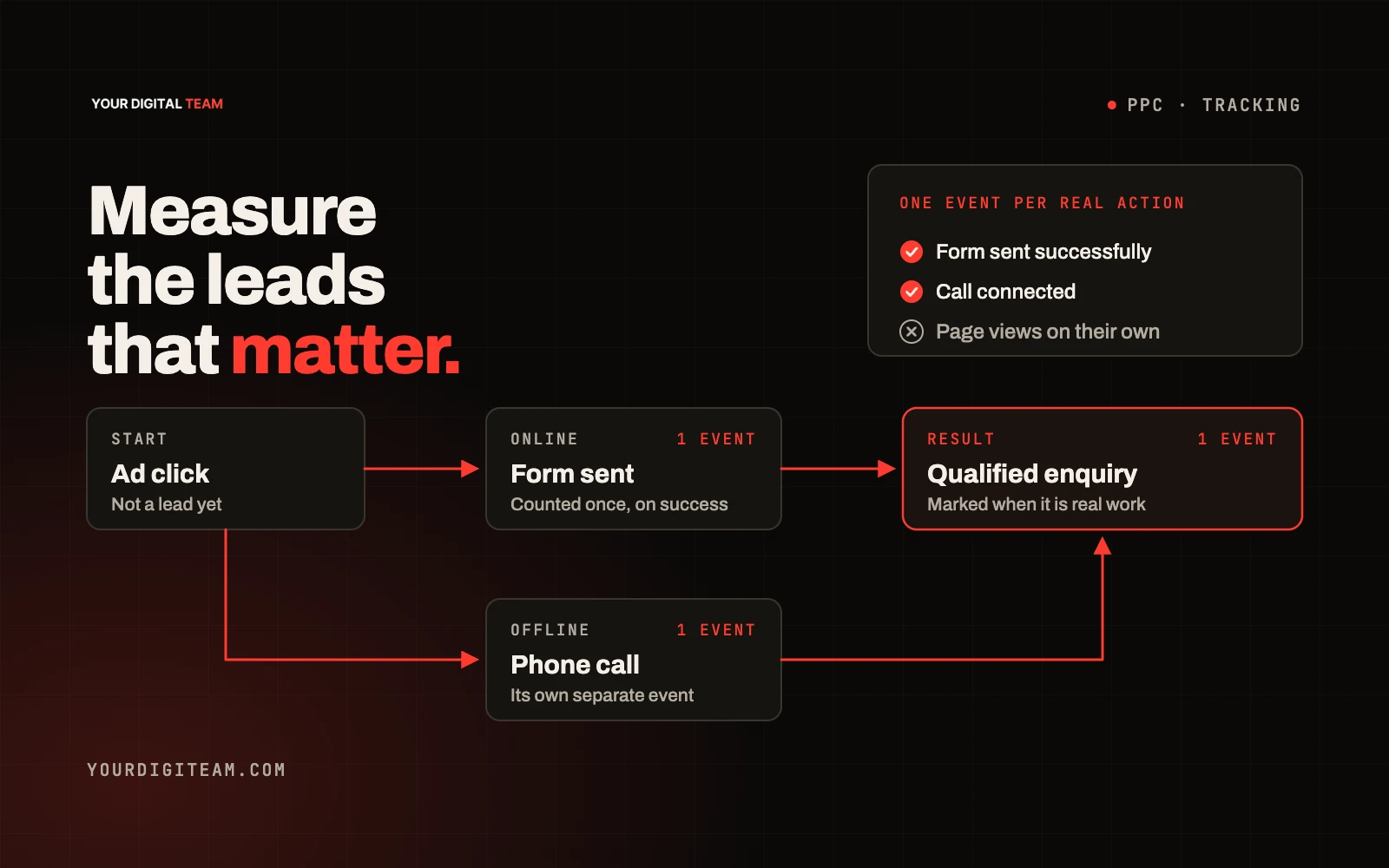
What most businesses should avoid is doing both poorly — running low-budget ads with no conversion tracking while also paying for SEO content that has no strategy behind it. That is where budgets go to die.
If you are not sure which makes sense for your business right now, that is exactly the conversation we have on a strategy call. No jargon, no package-pushing, just an honest look at where you are and what the best path forward looks like.
Book a free strategy call and we will tell you straight.