


Web design and development, Newcastle
Fast sites, and the tracking to prove it.
A site that takes four seconds to load has lost a quarter of its visitors before it gets to make its case. We build for speed first, measure it against Google's own thresholds, and wire up the analytics so every enquiry traces back to what produced it.
Bespoke web design for small businesses, trades and ecommerce across the North East. You own the code and the hosting.
Websites
Design first and you get a site that looks right and doesn't sell. Structure first and the design has something to decorate. Every build starts with what each page has to do.
How we work- Bespoke web design
- Built for a mid-range phone on mobile data
- Core Web Vitals checked on field data
- GA4 events on calls, forms and bookings
- Redirect map so rankings survive the move
- You can edit it without calling us
- + More
What's included
- 0.8sLargest contentful paint
- 100Accessibility, Lighthouse
- 16Live sites you can go and open
- YoursYou own the code and the hosting

How it actually works
Every second has a price.
The share of visitors who give up climbs steeply with load time, and the steepest part of that curve is between one and three seconds, which is exactly where most business sites sit. You are usually paying for those visitors. Every one lost to a slow page is spend you have already committed, and it is almost always cheaper to fix the page than to buy replacements for the people it lost.
- Built for a mid-range phone on mobile data, not the laptop it was designed on
- You own the code and the hosting from day one
What we can help you with
Everything a site needs to sell.
Bespoke web design
Wireframes settle what each page has to do and what question it answers before anyone picks a font.
Web development
Images sized and served properly, fonts that don't block the first paint, no framework loaded to animate one button.
Ecommerce websites
Shops built for the basket, with the events wired so you know which product page and which campaign made the sale.
Small business websites
Trades and local services, with the quote form, the phone number and the trust signals where they carry the most weight.
Core Web Vitals
Measured on real Chrome users, not a lab score on our machine. Under 2.5 seconds, under 0.1 shift, under 200ms to respond.
Analytics and tracking
GA4 events on calls, forms and bookings, with values attached and the source carried through.
Accessibility
WCAG 2.2 AA. A legal requirement in the UK, and it overlaps almost entirely with just being easier to use.
Migrations and redirects
Every old URL mapped to its new home before the switch, so a rebuild never costs you the rankings the old site had.
Hosting and support
Fast hosting in your name, and a site you can edit without calling us every time a price changes.
01. How we measure it
Google's numbers, not ours.
"Fast" is not a matter of opinion. Google publishes three thresholds and measures every site against them using data from real Chrome users, not a lab test on our machine, which is how most agencies quietly report a good score.
- LCP, how long until the main thing appears. Under 2.5 seconds.
- CLS, how much the page jumps about while loading. Under 0.1.
- INP, how quickly it responds when tapped. Under 200ms.
- Largest contentful paintThreshold 2.5s. Was 4.1s0.8s
- Cumulative layout shiftThreshold 0.10. Was 0.340.00
- Interaction to next paintThreshold 200ms. Was 410ms42ms
- Lighthouse accessibilityMobile and desktop100
02. Every second has a price
Who leaves, and when.
Same traffic, same ad spend. At four seconds, 6,200 of 10,000 visitors stay to see the page. At 0.8 seconds, 9,100 do. That's 2,900 more people who actually saw what you sell, for no extra spend.
| Load time | Leave before it loads | Of 10,000 stay |
|---|---|---|
| 0.8s | 9% | 9,100 |
| 2s | 17% | 8,300 |
| 4s | 38% | 6,200 |
| 6s | 56% | 4,400 |
| 8s | 71% | 2,900 |
03. What finished means
A site isn't done when it looks right.
A pageview tells you somebody arrived. These tell you what they did, and which campaign paid for it. The top three are 492 outcomes you can put a value on. The fourth is a number that has never closed a sale.
- call_clickTap-to-call from a mobile214
- form_submitEnquiry, with the source attached186
- booking_completeSlot confirmed, value passed92
- page_viewWhat most setups stop at41,200
How we work
The order we do it in.
Design first and you get a site that looks right and doesn't sell. Structure first and the design has something to decorate.
- 01
Audit what you have before proposing a rebuild
Hosting, page speed, crawlability, tracking, and every place the current build loses people. Sometimes the honest answer is that you don't need a new site. You need four templates fixed and the tracking rebuilt, at a fraction of the cost. We'd rather tell you that than sell you a project you didn't need.
- 02
Design the route before the look
Wireframes settle what each page has to do, in what order, and what question it answers before the visitor is asked for anything. Getting that wrong is not fixable with better photography, and it is far cheaper to argue about at the wireframe stage than after the build.
- 03
Build for a mid-range phone on mobile data
Not for the laptop it was designed on. Images sized and served properly, fonts that don't block the first paint, no framework loaded to animate one button. Accessible by default, and structured so you can edit the content without calling us every time a price changes.
- 04
Wire the analytics to outcomes, not pageviews
GA4 events on calls, forms and bookings, with values attached and the source carried through. If you can't tell which page and which campaign produced an enquiry, the build isn't finished, and every marketing decision after launch is a guess wearing a dashboard.
- 05
Launch without losing what you already ranked for
Every old URL mapped to its new home before the switch, tested on real devices and browsers, Core Web Vitals checked against field data rather than a lab score. A rebuild that costs you your rankings is the most expensive kind of new website there is, and it is entirely avoidable.











What does a website cost?
The site audit costs nothing, and it often shows you don't need a full rebuild. If you do, we price the build against the pages and features in the plan, and you'll see the number before you commit to anything.
How long does a website take?
Most business sites take six to ten weeks from wireframes to launch, depending on how much content there is. Fixing four templates and the tracking on an existing site is quicker, usually two to three weeks.
Will I lose my rankings when the new site launches?
Not if it's done properly. Every old URL is mapped to its new home before the switch, and we check the redirects and Core Web Vitals on launch day. Zero rankings lost is the standard, not the hope.
Can I edit the site myself?
Yes. Sites are built so you can change prices, pages and photos without calling us. You own the code and the hosting, and you keep both if you ever leave.
Am I tied into a contract?
No long tie-ins. We work month to month, because an agency that has to keep earning your business tends to behave better than one that doesn't.
Do you work outside the North East?
Yes. We're based in Newcastle and most clients are nearby, but we run work across the UK, in Spain and in the US already. Remote-first, on site when it actually matters.
Our work
Recent builds.
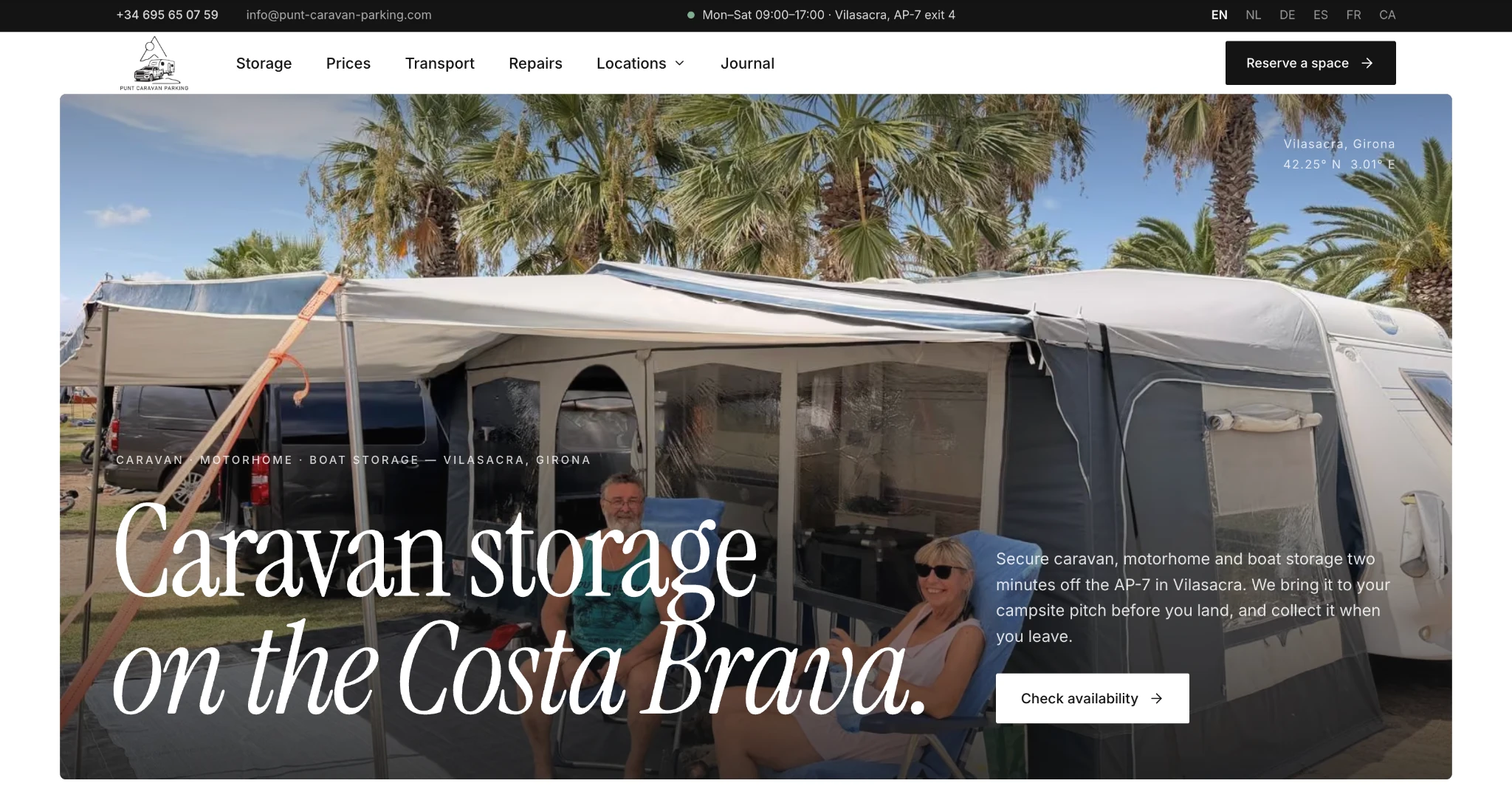 Punt Caravan Parking
WebsiteCaravan, motorhome and boat storage on the Costa Brava.Explore
Punt Caravan Parking
WebsiteCaravan, motorhome and boat storage on the Costa Brava.Explore
 Website and local SEOHeating and air conditioning engineers across London and the South East.
Explore
Website and local SEOHeating and air conditioning engineers across London and the South East.
Explore
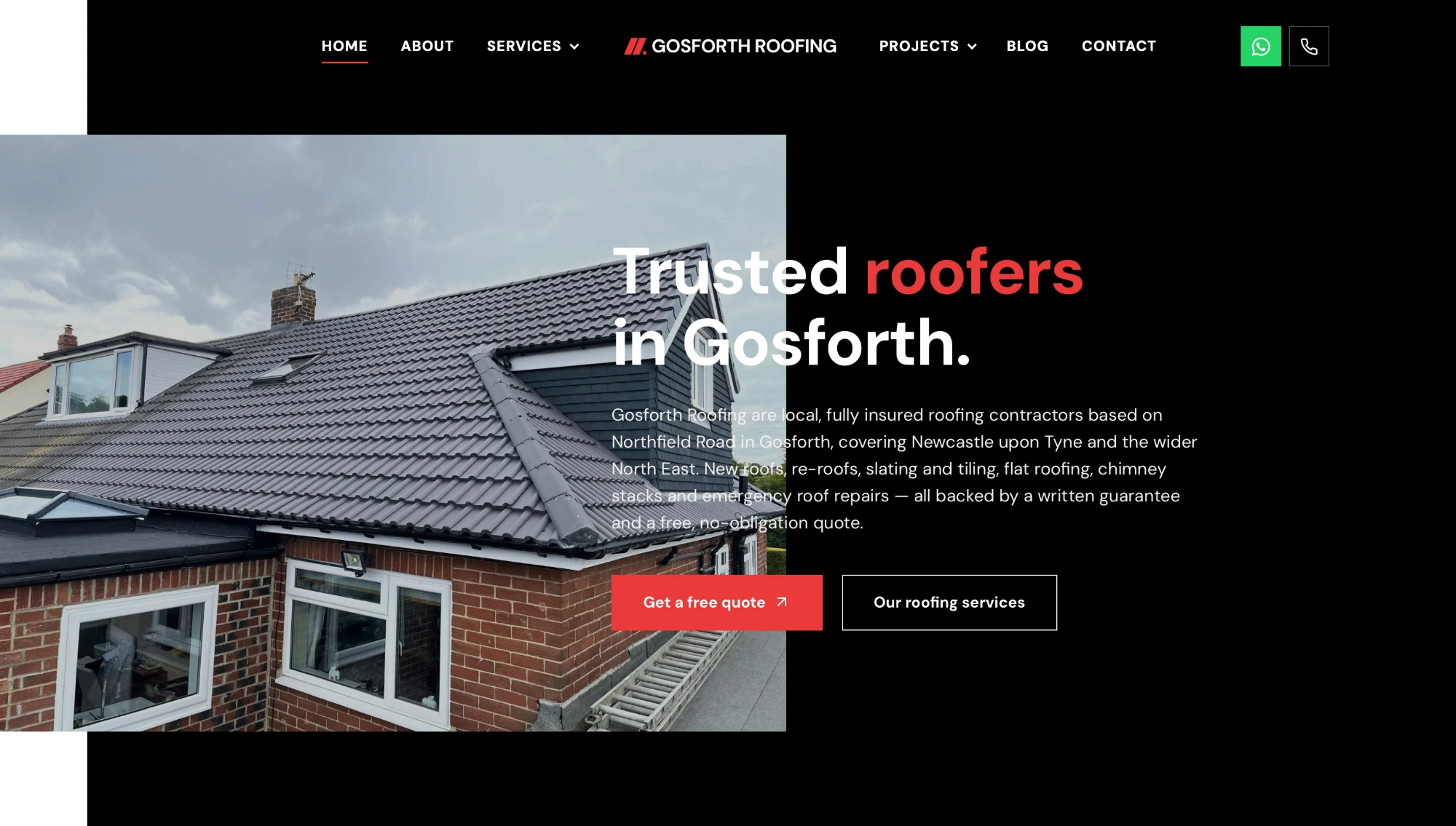
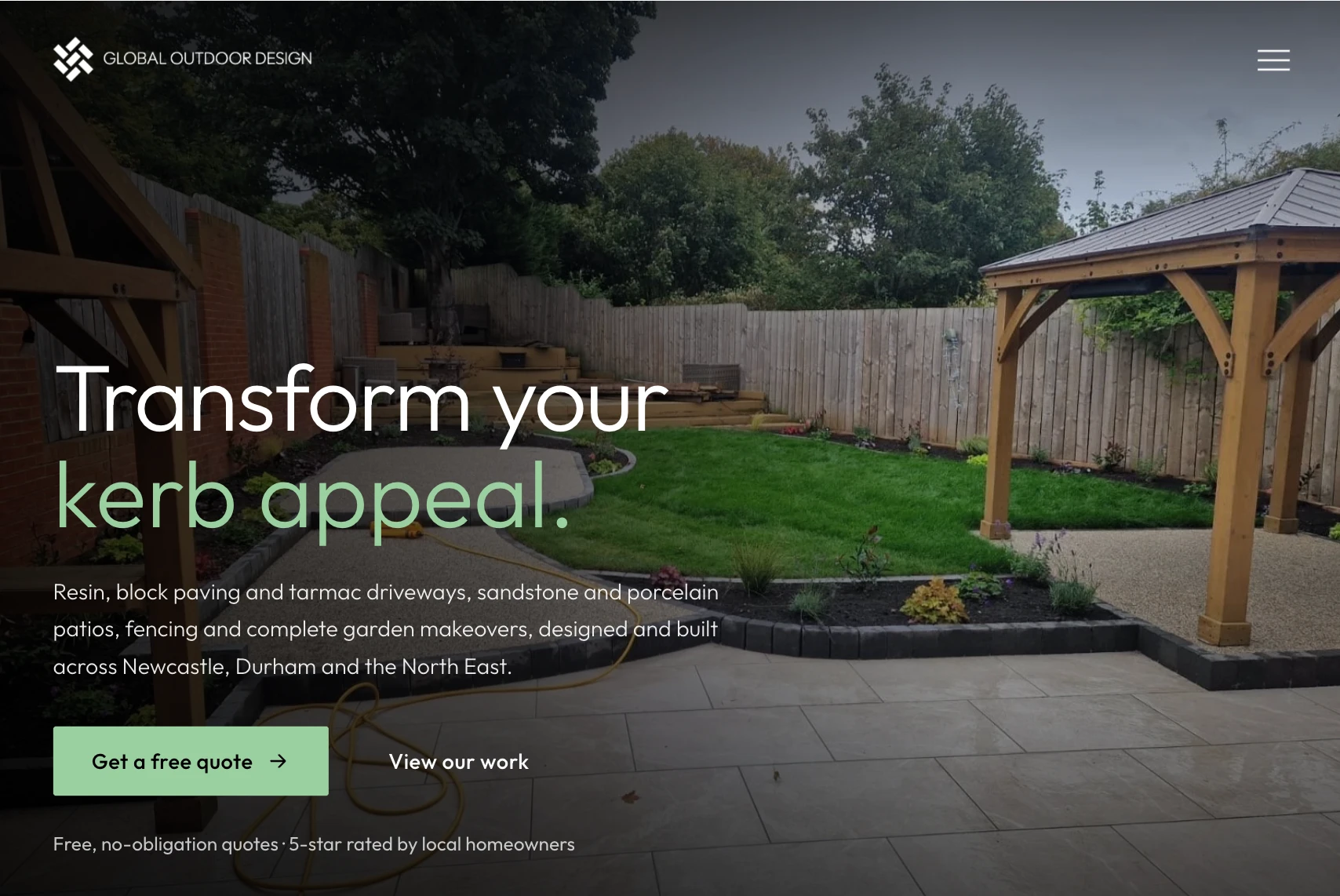
More websites we've worked onView all 8 sitesShow fewer sites






The rest of it
The site is where it all lands.
Every other channel spends money sending people here. This is the page that either converts them or doesn't.
Search engine optimisation
Half of technical SEO is web development. This is where the crawl fixes actually get made.
Pay-per-click
A faster, more relevant landing page lowers your cost per click directly. It's the cheapest lever in the account.
Content creation
The words the templates are built to hold. A fast page with nothing to say still doesn't rank.
Web development You're here
Built for speed, measured against Google's thresholds, with the tracking wired to real outcomes.
Social media
The page the bio link points at, usually opened on a phone with one bar of signal.
Email marketing
Where the sign-up form and the basket live, the two places every automation gets triggered from.
Start here
Find out what the site is losing.
Send us the URL and we'll come back with your real Core Web Vitals, what your tracking is currently missing, and whether you need a rebuild or four templates fixed, before you've committed to anything.