6 min read
Why Your Website Gets Traffic But No Enquiries (And How to Fix It)
 Written byThomas FitzgeraldFounder, Your Digital Team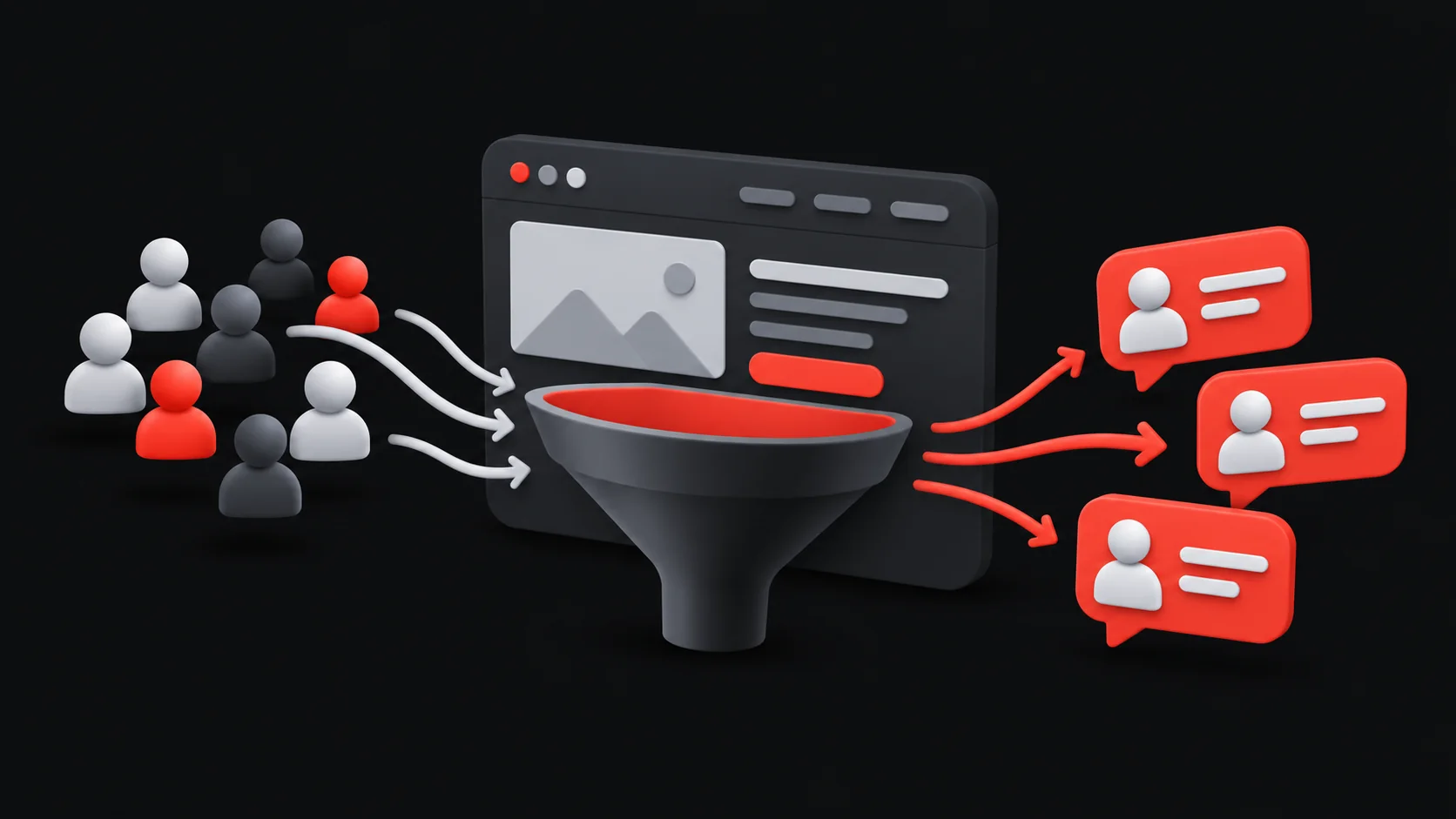
WebsitesPublished 16 Apr 2026
You check your analytics and the numbers look reasonable. People are visiting your website. But the phone is not ringing, the contact form is sitting empty, and you cannot figure out why.
This is one of the most frustrating positions a business owner can be in — and it is more common than most agencies will admit, because traffic is the metric they love to report on. It looks good on a dashboard. It is easy to grow. And it distracts from the real question, which is whether your website is actually generating business.
Here is why it happens and what to do about it.
The Traffic You Are Getting Is the Wrong Traffic
Not all visitors are created equal. If your website is ranking for broad, informational keywords — the kind people search when they are curious rather than when they are ready to buy — you will accumulate visits from people who were never going to become customers.
A plumber whose website ranks for "how central heating works" will get traffic. None of it will turn into bookings.
The fix is to look honestly at which keywords are bringing people to your site and ask whether those people have any buying intent. If the answer is no, your SEO strategy needs to shift toward transactional and local keywords — the searches people make when they are actually looking to hire someone.
Traffic from the right keywords converts. Traffic from the wrong keywords just inflates your analytics.
Your Website Does Not Answer the Questions Visitors Are Actually Asking
When someone lands on your website, they are asking a series of questions almost immediately. What does this company do? Do they serve my area? Are they any good? What will it cost me? How do I get in touch?
If your website does not answer those questions quickly and clearly, people leave. Not because they are not interested — but because you have not given them a reason to stay.
Look at your homepage with fresh eyes. Does it immediately communicate what you do, who you do it for, and why someone should choose you over everyone else? Or does it open with a vague tagline and a stock photo that could apply to any business in any industry?
Clarity converts. Ambiguity loses people in seconds.
There Is No Clear Next Step
This is the most common conversion problem we see. People arrive, they read, they are interested — and then they have no obvious idea what to do next.
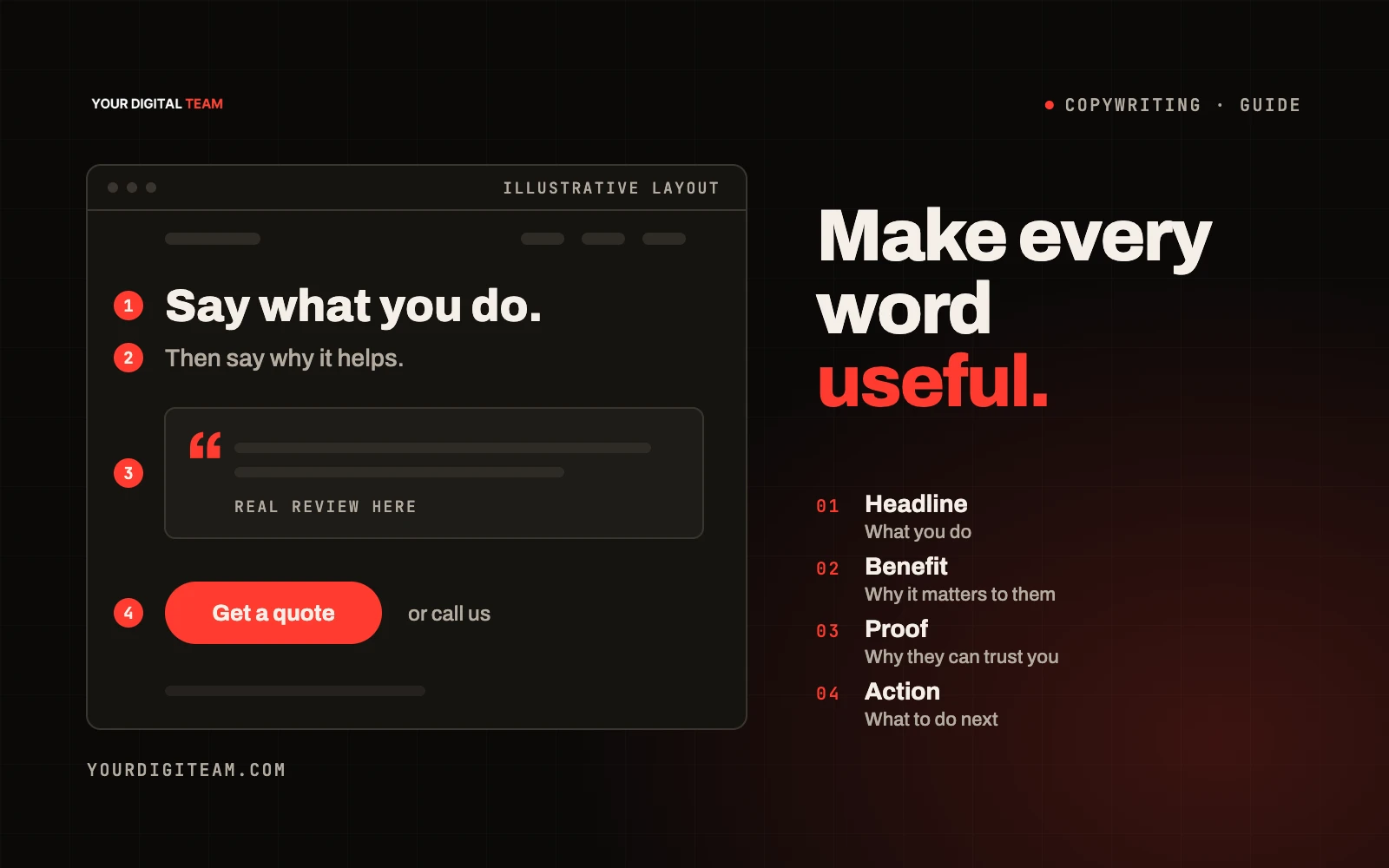
Every page on your website should have one clear call to action. Not five options. Not a buried contact link in the footer. One primary action you want the visitor to take, made obvious and easy.
For most service businesses that means a phone number visible at the top of every page, a contact form that takes less than a minute to fill in, and a call to action that tells people exactly what they will get when they reach out. "Get a free quote" converts better than "contact us" because it tells people what happens next.
If your website makes people work to figure out how to enquire, most of them will not bother.
Your Website Does Not Build Enough Trust
Buying a service from a business you have never heard of requires trust. Your website is where that trust either gets built or does not.
The signals people look for are fairly consistent. Reviews and testimonials from real customers. Case studies that show actual results. Photos of real people, not stock images. Logos of companies you have worked with. Accreditations, memberships, or qualifications that are relevant to your industry.
A website that looks like it was built in an afternoon with no social proof and no evidence of real work is going to lose enquiries to a competitor who has invested in demonstrating credibility — even if your service is genuinely better.
Ask yourself: if someone landed on your website having never heard of you, would they trust you enough to hand over their contact details?
The Website Is Slow or Hard to Use on Mobile
More than half of web traffic now comes from mobile devices. If your website is slow to load, hard to navigate on a phone, or has buttons that are too small to tap accurately, you are losing a significant portion of your visitors before they have even read a word.
Speed matters more than most people realise. Research consistently shows that conversion rates drop sharply as page load times increase. A site that takes four seconds to load will lose a meaningful percentage of visitors compared to one that loads in under two.
Test your website on your phone right now. Is it fast? Is it easy to use? Is the phone number tappable? If the answer to any of those is no, that is costing you enquiries every single day.
You Are Attracting Browsers, Not Buyers
Some businesses have a content strategy that is very good at attracting people who are interested in their industry but have no intention of spending money. A financial adviser whose blog ranks well for personal finance tips will get readers. Most of them will never become clients.
Content that attracts browsers has its place — it builds awareness and authority over time. But if your website is almost exclusively drawing in people at the top of the funnel with no content or landing pages targeting people who are ready to buy, your enquiry rate will be low regardless of how much traffic you generate.
The solution is to make sure your website has strong pages targeting the specific services you offer in the specific areas you serve — pages built around what buyers search, not just what readers search.
How to Diagnose the Real Problem
If you have Google Analytics set up properly with goal tracking, you can see exactly where people are dropping off. Which pages have high exit rates? Where do people leave without taking any action? That data tells you where the problem is.
If you do not have conversion tracking in place, you are flying blind. You know how many people visited, but you have no idea what they did or where they went. Setting up goal tracking for form submissions and phone call clicks should be the first thing on your list.
Once you can see the data, the fix usually becomes obvious. High traffic, low time on page — your content is not relevant to what people were looking for. High time on page, no conversions — your call to action is unclear or your trust signals are weak. High bounce rate on mobile — your site has a usability problem.
Traffic Is Vanity. Enquiries Are the Point.
A website that gets 500 visits a month and generates 20 enquiries is worth considerably more to your business than one that gets 5,000 visits and generates 3.
If your website is not converting, the answer is rarely just more traffic. It is almost always a combination of targeting the right traffic in the first place and making sure your website does its job when people arrive.
That is the work most agencies do not want to do, because it is harder to report on than keyword rankings and session counts. But it is the work that actually moves your business forward.
If you want an honest assessment of why your website is not generating the enquiries it should be, book a free strategy call. We will look at your traffic, your conversion data, and your site, and tell you exactly what is getting in the way.