


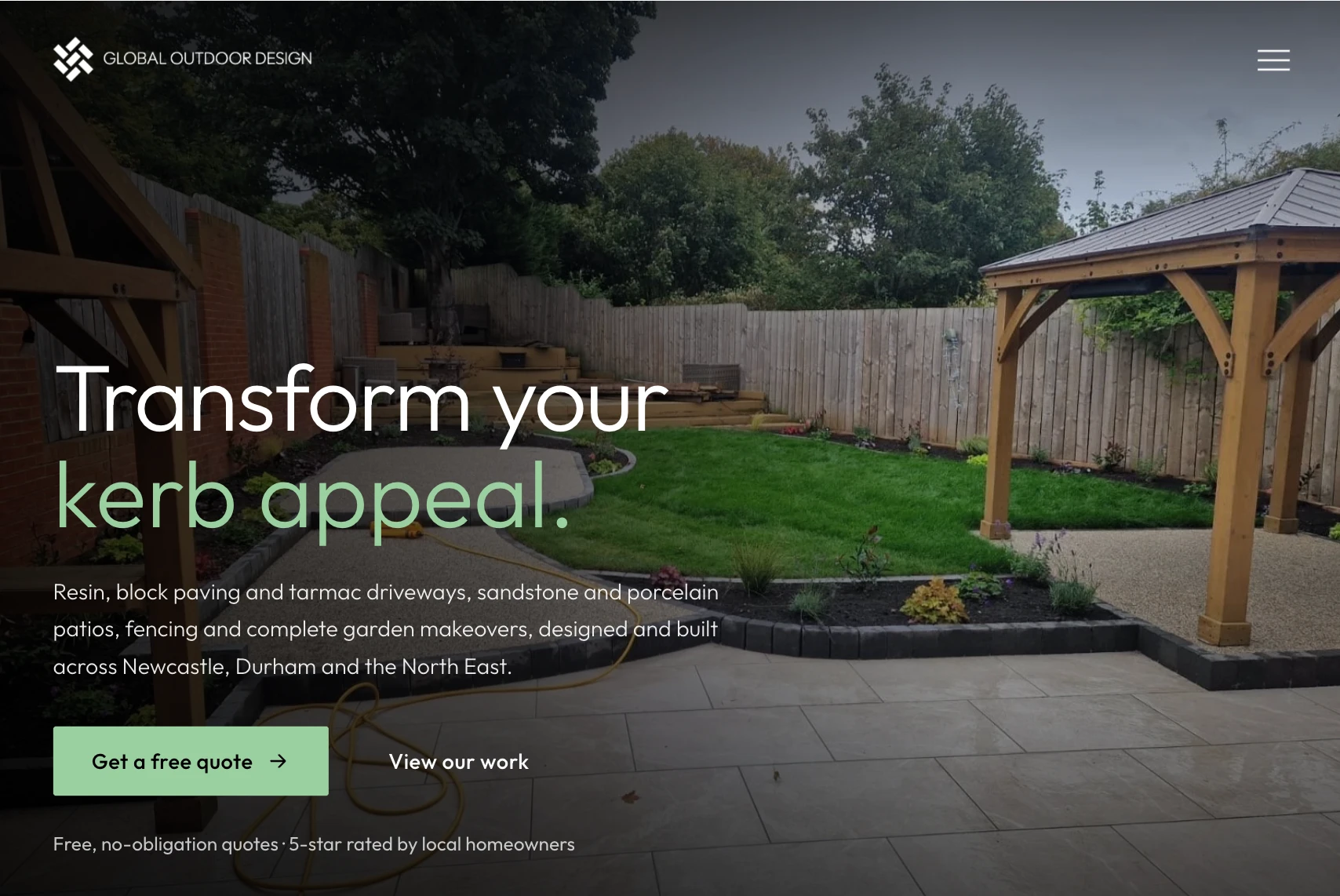
 Website and brandingDriveways, patios and garden makeovers across the North East.
Launching soon
Website and brandingDriveways, patios and garden makeovers across the North East.
Launching soon

Search engine optimisation
Position one for a term nobody buys from is a vanity metric. We find the searches your customers make when they're ready to spend, fix what's stopping you appearing for them, and report the movement in plain English every week.
No SEO plan is the same. We look at your site, your rankings and your competitors first, then build the plan around what a customer from each search is actually worth to you.
SEO

Why us
We map every term to a stage of your buying cycle and to what a customer from it is worth. A 200-a-month term where people are ready to buy beats a 20,000-a-month term where they're browsing. We'll show you the maths before we commit the roadmap, and you'll see the movement every week.
What we can help you with
We crawl the whole site and fix what stops Google reading it: broken links, duplicate titles, orphaned pages and slow templates.
Every term mapped to a stage of your buying cycle and to what a customer from it is worth. Chosen by revenue, not volume.
Each page answers one question completely, with titles, headings, internal links and schema all pointing the same way.
Digital PR, original data and direct outreach to the publications your market already reads. Nothing bought from a marketplace.
A live position for every term that matters, against a named competitor set. Not a monthly screenshot.
Impressions, clicks and position pulled from your own account, reported weekly in plain English.
Core Web Vitals, crawl errors and render-blocking scripts fixed, because a page Google can't load can't rank.
Featured snippets, People also ask and the local pack: the blocks that now sit above position one.
Hub pages and the cluster around them, so Google sees you cover a subject rather than skim it.
01. Where you rank
Not a monthly screenshot. A live position for every term that matters, against a named competitor set, so you can see what moved this week and why.
| Keyword | Intent | Vol/mo | Pos | 90d |
|---|---|---|---|---|
| ai automation agency | Commercial | 3,600 | 1 | +9 |
| enterprise ai platform pricing | Transactional | 1,300 | 2 | +6 |
| best ai chatbot for business | Commercial | 8,100 | 3 | +4 |
| what is an ai agent | Informational | 18,100 | 5 | +12 |
| ai workflow software | Commercial | 4,400 | 7 | +11 |
02. What it is worth
Rankings are the input. These three are the output, and they're the numbers we're actually accountable for, pulled straight from your own Search Console rather than a third-party estimate we control.
03. Authority
Rankings follow trust, and trust is measured in who links to you. We earn those links through digital PR, original data and direct outreach to the publications your market already reads.
No directories, no private blog networks, nothing bought from a marketplace. Those work until an algorithm update, and then they cost you everything you built.
Recently earned
How we work
Sequence matters. Publishing content onto a site Google can't crawl properly is money spent twice.
We crawl the whole site and fix what stops Google reading it: broken links, duplicate titles, orphaned pages, render-blocking scripts, slow templates. This is unglamorous and it is where most of the early movement comes from. You often have pages that deserve to rank and simply can't.
We map every term to a stage of your buying cycle and to what a customer from it is actually worth. A 200-a-month term where people are ready to buy beats a 20,000-a-month term where they're browsing. We'll show you the maths before we commit the roadmap.
Every page answers one question completely, structured so the search engine understands what it's for and the visitor has no reason to go back to the results. Titles, headings, internal links and schema all point the same way.
Digital PR, original data and direct outreach to publications your market already reads. No directories, no private networks, nothing from a marketplace. Bought links work right up until an update, and then they cost you more than they ever returned.
Rankings, traffic and revenue against the plan, reported weekly in plain English. What underperforms gets cut rather than defended. What converts gets more resource. That loop is the whole reason organic compounds instead of plateauing.










The audit and the plan cost nothing. If you go ahead, we price the work monthly against what the plan says we're doing. You'll see the number before you commit to anything.
The audit lands in the first two weeks and the plan in week three. Technical fixes move things first, often inside the first couple of months. Content and links compound from there, so expect the bigger movement over six to twelve months.
No long tie-ins. We work month to month, because an agency that has to keep earning your business tends to behave better than one that doesn't.
Take the free audit anyway and hold them to it. Plenty of people use it as a second opinion and stay where they are. That's a fine outcome.
No. Directories, private blog networks and marketplace links work until an algorithm update, and then they cost you everything you built. Every link we place is one we'd be happy to show you the email thread for.
Yes. We're based in Newcastle and most clients are nearby, but we run work across the UK, in Spain and in the US already. Remote-first, on site when it actually matters.
Our work
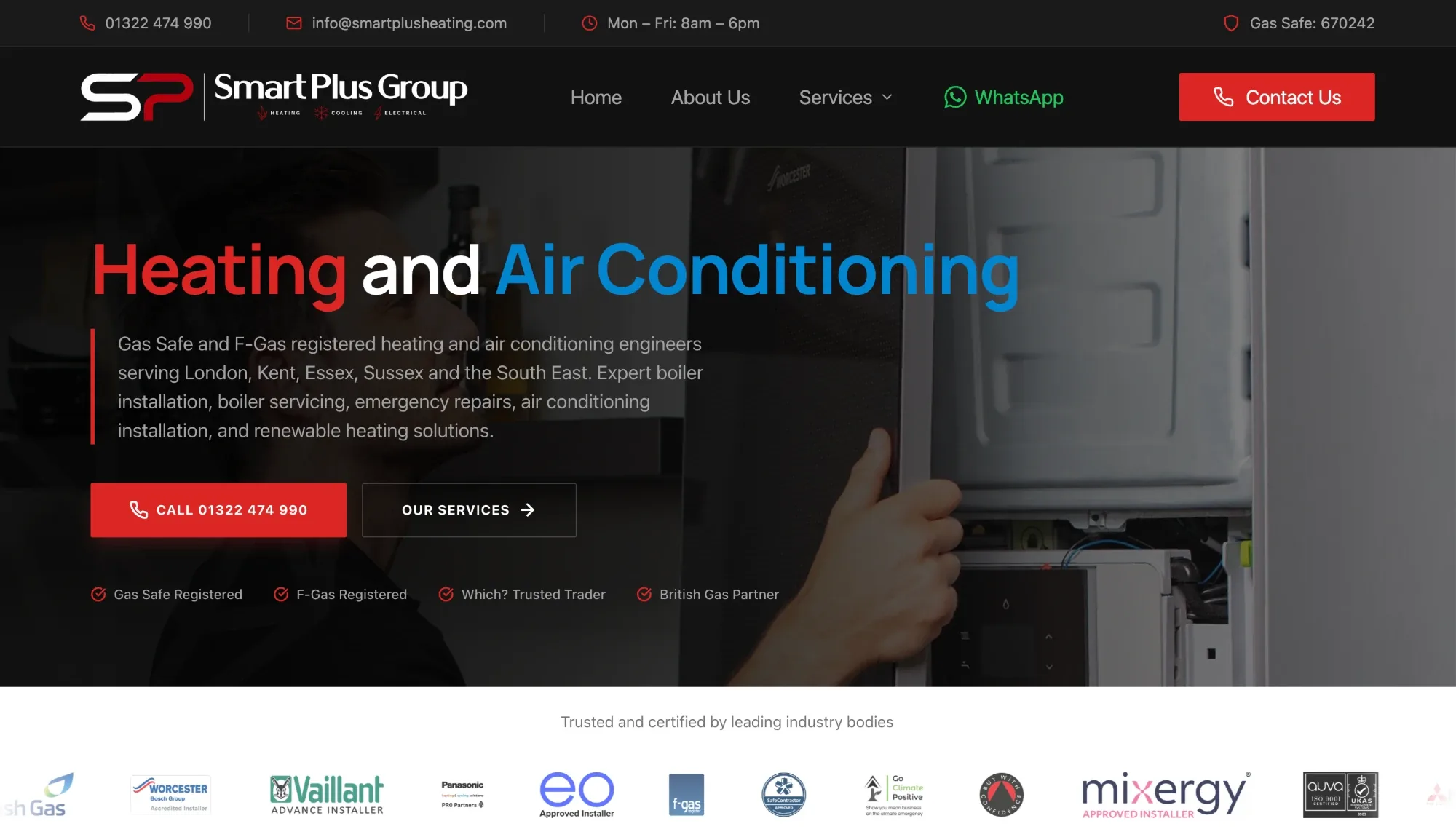 Website and local SEOHeating and air conditioning engineers across London and the South East.
Explore
Website and local SEOHeating and air conditioning engineers across London and the South East.
Explore
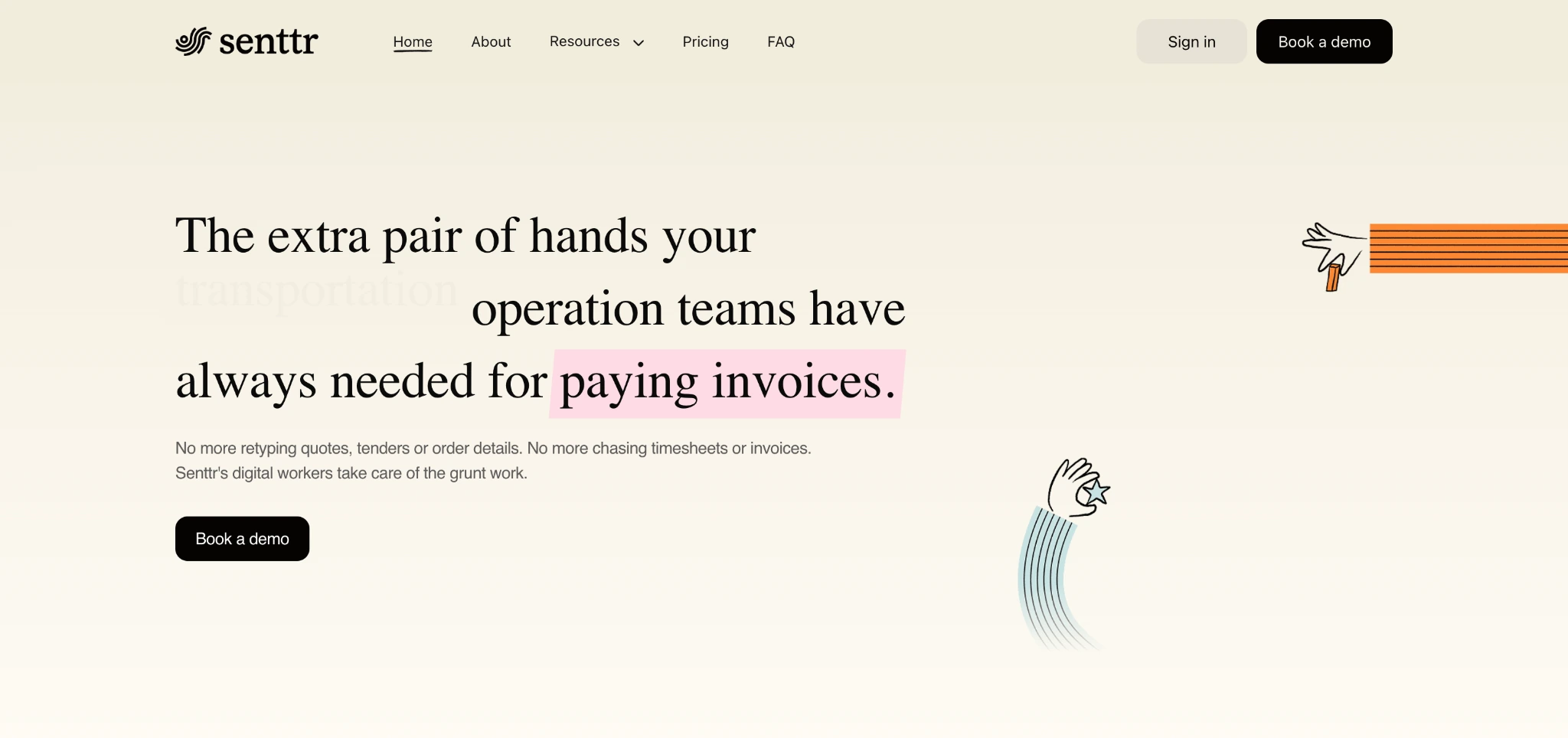 Website and product marketingDigital workers for operations teams, explained in one scroll.
Explore
Website and product marketingDigital workers for operations teams, explained in one scroll.
Explore
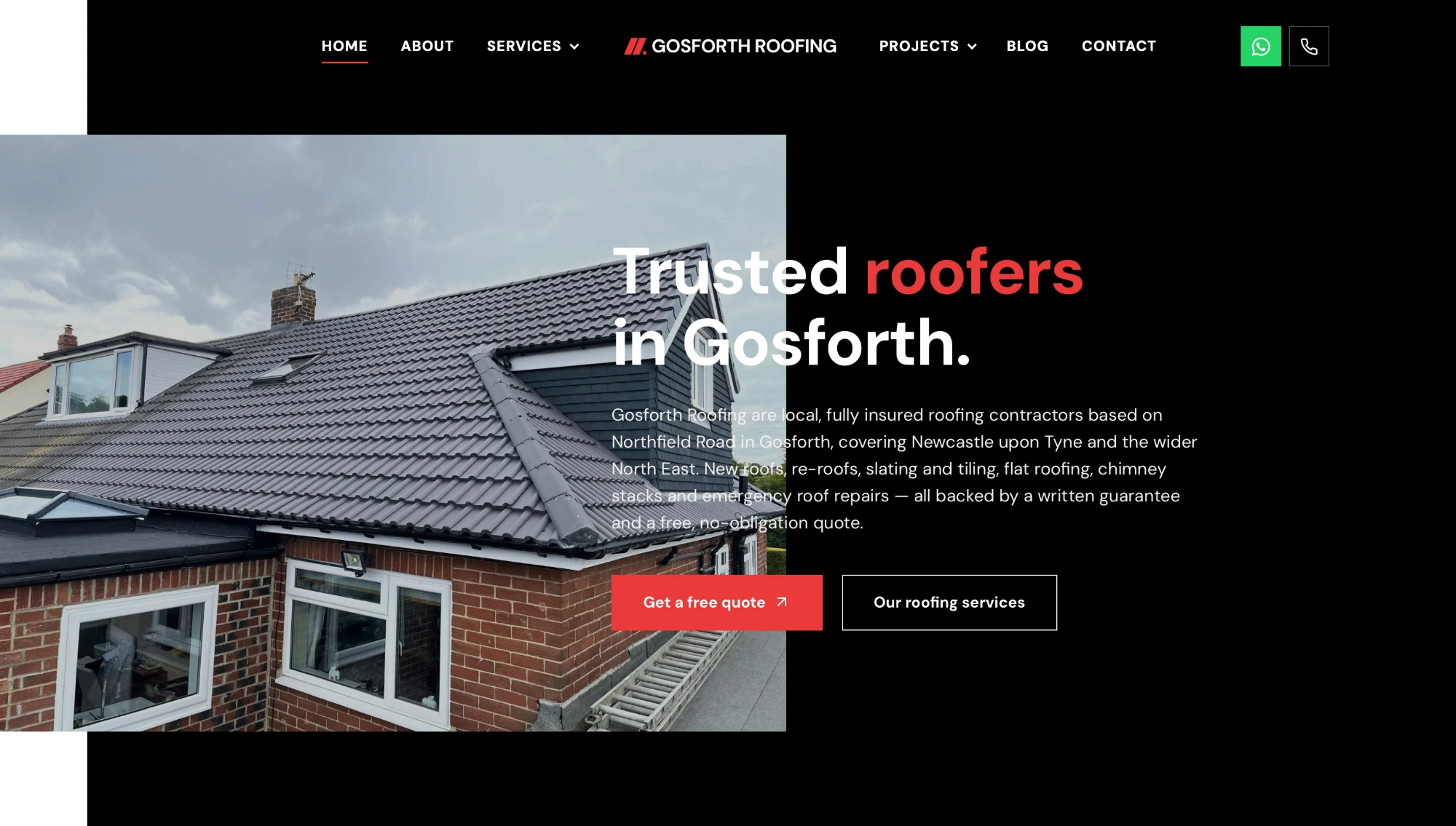 Website and local SEOTrusted roofers in Gosforth, found first on Google.
Explore
Website and brandingDriveways, patios and garden makeovers across the North East.
Launching soon
Website and local SEOTrusted roofers in Gosforth, found first on Google.
Explore
Website and brandingDriveways, patios and garden makeovers across the North East.
Launching soon
The rest of it
Organic takes months to compound. These are what we run alongside it so you aren't waiting on it alone.
Technical fixes, intent-led content, and links earned from publications your market reads.
Buys the traffic while organic builds, and tells you which terms convert before you invest in ranking for them.
The pages the SEO roadmap calls for, written around search intent rather than a word count.
Where the technical fixes actually get made, and where Core Web Vitals are won or lost.
Distribution for the content SEO produces, and the brand searches that follow from it.
Turns the organic traffic you worked for into a list you own, rather than a one-time visit.
Start here
Send us the domain and we'll come back with the terms you should be ranking for, what's currently stopping you, and what it's worth, before you've spent anything.