7 min read
SEO for Tradesmen: A Practical Checklist for Plumbers, Electricians and Roofers
 Written byThomas FitzgeraldFounder, Your Digital Team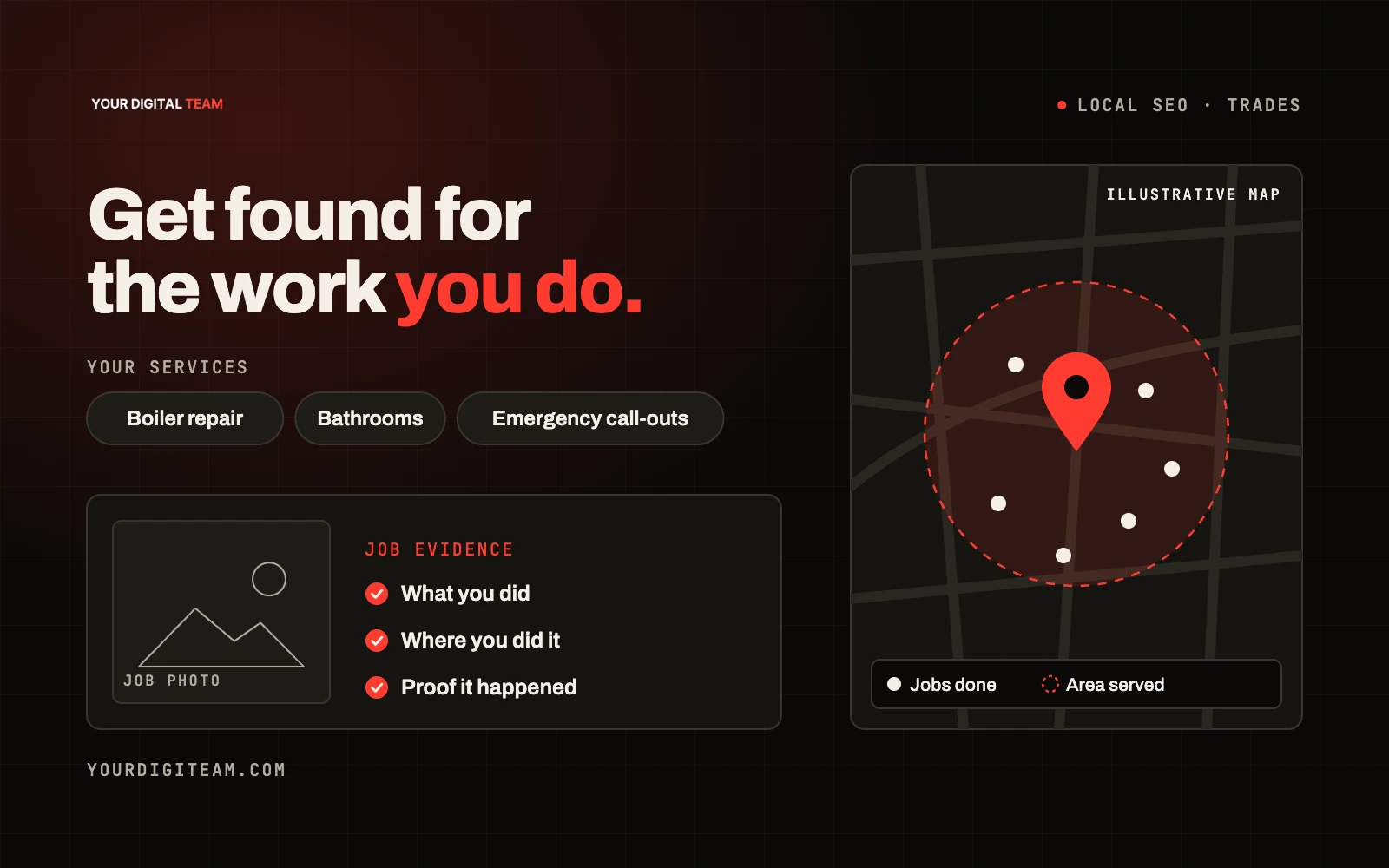
SearchPublished 29 Sep 2026
SEO for a trade business comes down to three things: making it obvious to Google which jobs you do and where you do them, proving you are a real, trustworthy business, and making it easy for someone with an urgent problem to contact you. You don't need a huge website or a daily blog. You need a clear site, a complete Google Business Profile, a steady flow of genuine reviews and evidence of real work.
This is a checklist you can work through yourself, in the order that usually gives the most benefit for the least effort.
Why SEO works differently for trades
Most trade searches are local and urgent. Someone with a leaking pipe, a tripped consumer unit or a slipped tile wants a nearby, reliable person who can come soon. That shapes what matters:
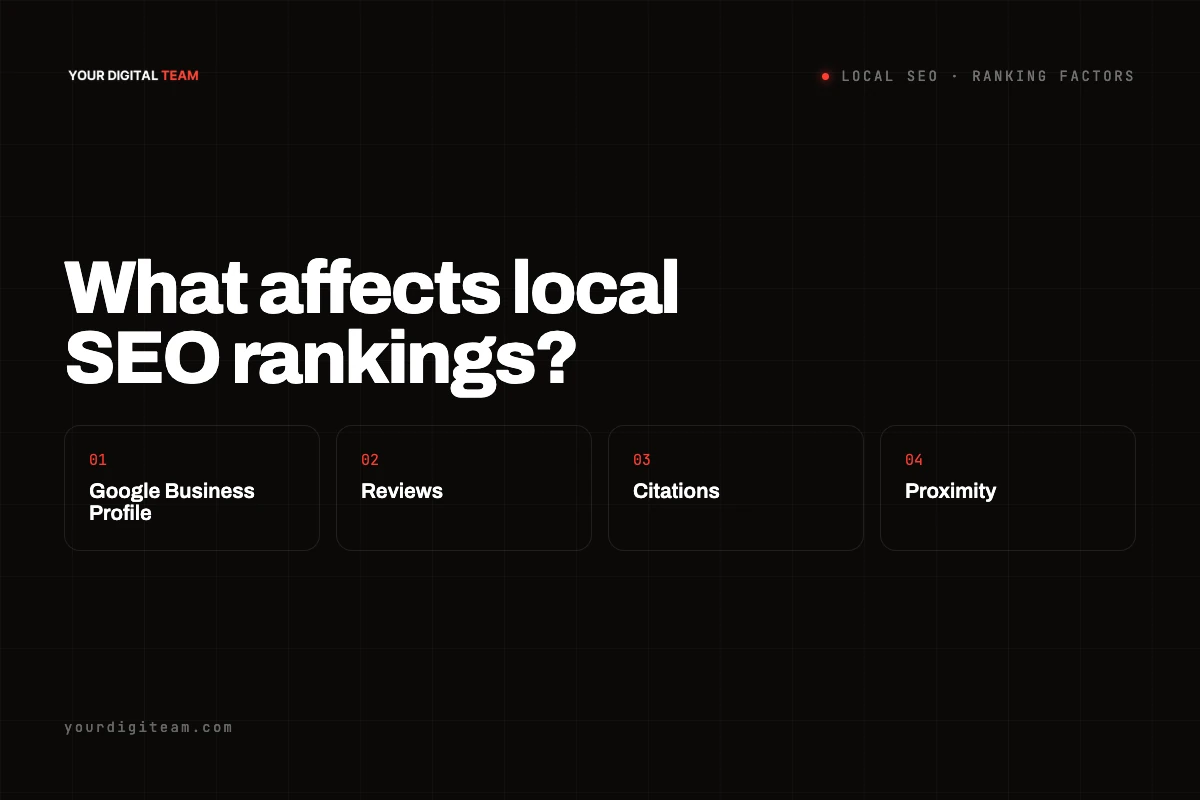
- Local results matter most. Google says local rankings are based mainly on relevance, distance and prominence, according to its local ranking guidance.
- Trust signals matter more than clever writing. Accreditations, reviews, real photos and clear prices do more than long articles.
- Mobile matters most of all. Many of these searches happen on a phone, often in a hurry.
For a deeper look at what moves local rankings, see our guide to what affects local SEO rankings. This checklist is the practical to-do list.
Step 1: Define your service boundaries
Before touching your website, write down two lists.
Jobs you do (and want more of): for example, bathroom installs, boiler replacements, emergency leak repairs.
Jobs you don't do: for example, commercial gas work, new-build plumbing, work outside a certain area.
Then write down the areas you genuinely cover. Be honest. Listing towns you won't travel to leads to wasted calls and frustrated customers, and it does nothing for trust.
These lists drive everything else: which pages you build, what goes in your Business Profile and what you say on the phone.
Step 2: Get your Google Business Profile right
For most trades this is the single most important step. If you haven't set one up properly, our Google Business Profile setup guide walks through it. The essentials:
- Primary category that matches your main trade exactly (for example "Plumber" or "Electrician")
- Additional categories only for services you genuinely offer
- Service area set to the areas you actually cover
- Business name exactly as it appears on your van, invoices and signage
- Phone number that is answered, or goes to a voicemail you check
- Services listed with plain descriptions
- Opening hours, including whether you offer emergency call-outs
- Real photos of your work, van and team
Keep your name honest. Google's guidelines for representing your business say the name should reflect your real-world business name. Stuffing extra keywords into it risks suspension.
Step 3: Build one page per main service
A single "Services" page listing everything makes it hard for Google and customers to tell what you specialise in. Instead, give each main service its own page.
A good trade service page includes:
- What the job is, in plain words
- Signs you need it (for example "radiators cold at the top", "lights flickering when appliances switch on")
- What's included and what isn't
- How it works, from first call to finished job
- Price guidance: a "from" figure or the main things that affect cost
- Evidence: photos of similar jobs, relevant accreditations
- Areas covered
- A clear way to get in touch, with click-to-call on mobile
You don't need a separate page for every village. One well-written page per service, with your service area stated clearly, is more useful than dozens of near-identical town pages.
Step 4: Show genuine job evidence
This is where trades have an advantage over almost every other sector: your work is physical and photographable.
- Before and after photos. Take them on every job, with the customer's permission, and avoid showing house numbers or anything identifying.
- Short project write-ups. Two or three sentences: the problem, what you did, the result. No need for a full case study.
- Accreditations with proof. If you are Gas Safe registered, NICEIC, a TrustMark member or similar, say so and explain how customers can check it.
- Insurance and guarantees. State what you actually offer, in writing.
Never use stock photos presented as your own work, and never invent projects or testimonials. Beyond the obvious honesty problem, fake reviews are now specifically banned under UK consumer law.
Step 5: Build a review habit
Reviews help your local visibility and your conversion rate. The trick is consistency: ask every customer, every time, in the same way, straight after the job.
- Get your review link from your Business Profile and save it on your phone
- Send it by text the same day with a short, polite message
- Reply to every review, good or bad, calmly and professionally
Don't offer discounts or freebies in return for reviews, and don't only ask customers you think are happy. Both are against Google's policy on fake engagement.
Step 6: Fix the basics on your website
- Site loads quickly on a phone
- Phone number visible at the top of every page and tappable on mobile
- Every page has a clear, descriptive title
- Business name, address (if customers visit) and phone number match your Business Profile
- Contact form is short and tested
- No broken pages or links
Google's SEO Starter Guide covers these basics in more depth and is written for non-specialists.
Step 7: Get listed where customers look
List your business on the directories and trade platforms that matter in your sector, and on local business directories. Keep your name, address and phone number identical everywhere. Consistency matters more than the number of listings.
Step 8: Be patient and measure what matters
SEO isn't instant. Our guide to how long SEO takes sets out realistic expectations. Track:
- Calls and enquiries, and where they came from
- Views and actions on your Business Profile
- Which services people are asking about
Rankings are a means to an end. Enquiries are what count.
What to avoid
- Creating dozens of town pages with the same text and the town name swapped
- Adding keywords to your business name on Google
- Paying for bulk directory submissions or links
- Claiming accreditations or guarantees you don't have
- Buying or incentivising reviews
Frequently asked questions
Do tradespeople need a website, or is a Google Business Profile enough? A profile can bring in calls on its own, but a website gives you space to explain services, show work and build trust. Together they work better than either alone.
Should I write a blog? Only if you'll keep it useful. A few genuinely helpful articles answering common customer questions are worth more than regular filler posts.
Can I rank in towns I don't have an address in? You can set a service area, but distance still matters. Focus on the areas you genuinely cover and serve well.
How often should I update my profile? Add photos after jobs, keep hours accurate and reply to reviews promptly. Little and often works best.
Want this done for you?
If you'd rather spend your time on the tools than on your website, our SEO service covers profile optimisation, service pages and review systems for trade businesses. Get in touch for an honest view of where you stand.
Sources
- Google Business Profile Help — Tips to improve your local ranking on Google
- Google Business Profile Help — Guidelines for representing your business on Google
- Google Maps — Prohibited and restricted content (user contributed content policy)
- Google Search Central — SEO Starter Guide