11 min read
What Is Content Marketing? Beyond Blogging
 Written byThomas FitzgeraldFounder, Your Digital Team
Content & authorityPublished 25 Sep 2026Updated
Want help putting this into practice? Explore our content marketing services.
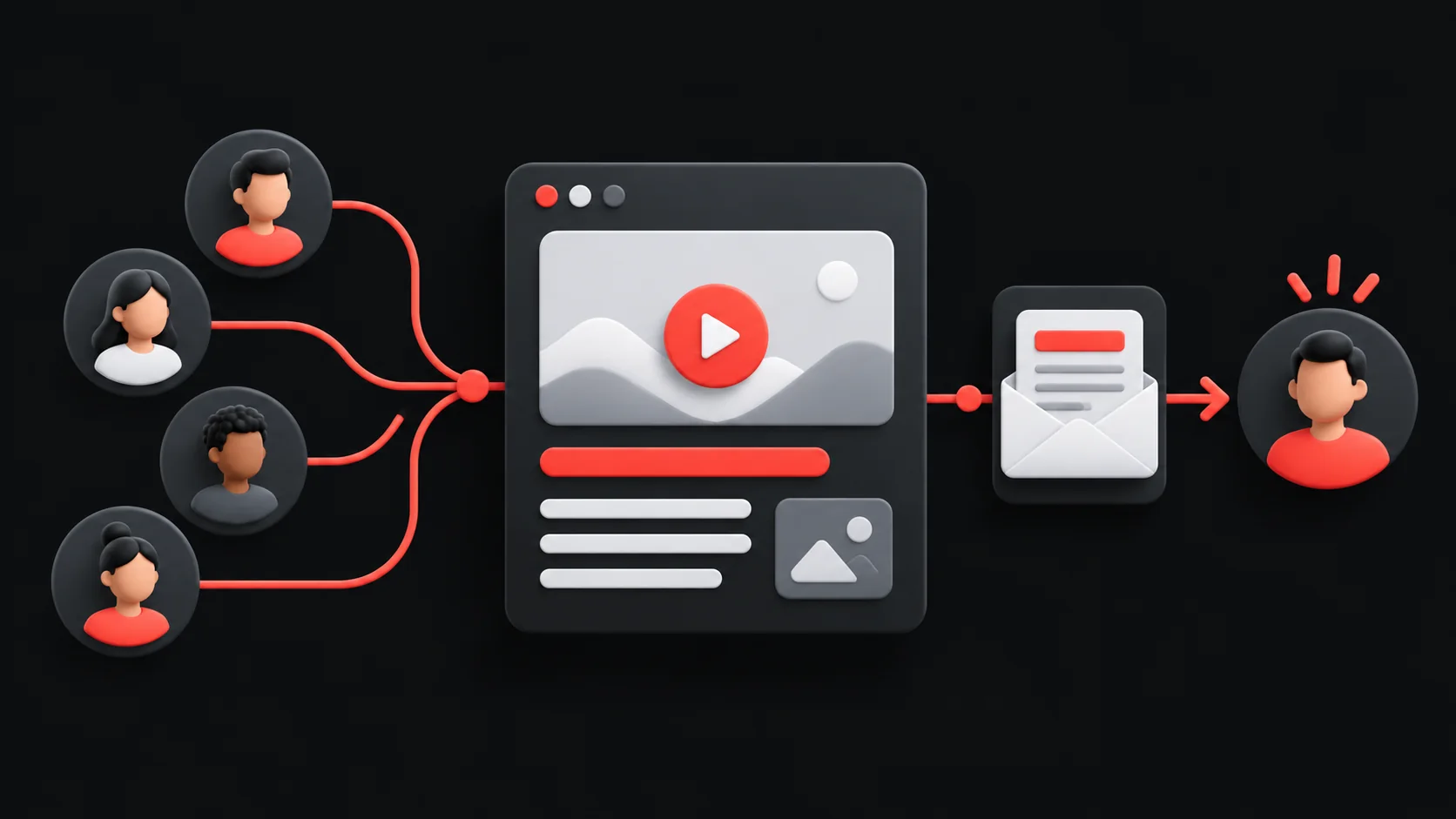
Content marketing is not “posting blogs”. It is using useful material to earn attention, build trust and help people choose you before they are ready to buy.
Content marketing means creating and sharing useful material, such as blog posts, guides, emails, videos and case studies, that helps your customers before you ask them to buy. The Content Marketing Institute defines it as "a strategic marketing approach focused on creating and distributing valuable, relevant, and consistent content to attract and retain a clearly defined audience and, ultimately, to drive profitable customer action." In plain terms: answer the questions your buyers already have, and they are more likely to come to you when they are ready.
To connect individual pieces to a useful plan, read what a content strategy includes before filling the publishing calendar.
Decide what to improve next with our practical guide to how to increase website traffic.
Done properly, content supports SEO, social media, email, sales and brand. Done badly, it becomes a calendar full of filler.
01. What content marketing means
It is marketing that gives people a reason to pay attention.
Content marketing can be blog posts, guides, videos, emails, case studies, social posts, tools, comparisons, checklists or explainers.
The format matters less than the job. Good content answers the questions buyers already have, proves you understand their problem, and moves them one step closer to trusting you.
02. Why it works
Most buyers are not ready today.
People research before they enquire. They compare prices, options, risks, platforms, agencies and likely outcomes.
If your business answers those questions clearly, you become familiar before the sales conversation starts. That familiarity reduces doubt.
This is why useful content compounds. One good guide can rank, get shared, answer sales questions, support ads and feed email for months.
03. Four types of content
Different content does different work.
Educational content answers basic questions and builds trust.
Commercial content helps people compare options and make decisions.
Proof content shows results, examples, reviews and case studies.
Opinion content makes the brand feel specific rather than interchangeable.
A healthy content plan uses all four.
04. A realistic plan for a small business
Start with the questions closest to money.
Write the price pages. Write the comparison pages. Write the “is it worth it?” pages. Write the guides that explain what a customer should check before buying.
Then build supporting content around those pages: FAQs, short social posts, email follow-ups and case studies.
Do not start with vague awareness content if the site has no commercial answers yet.
05. How content, SEO and social work together
The best content is reused, not reinvented.
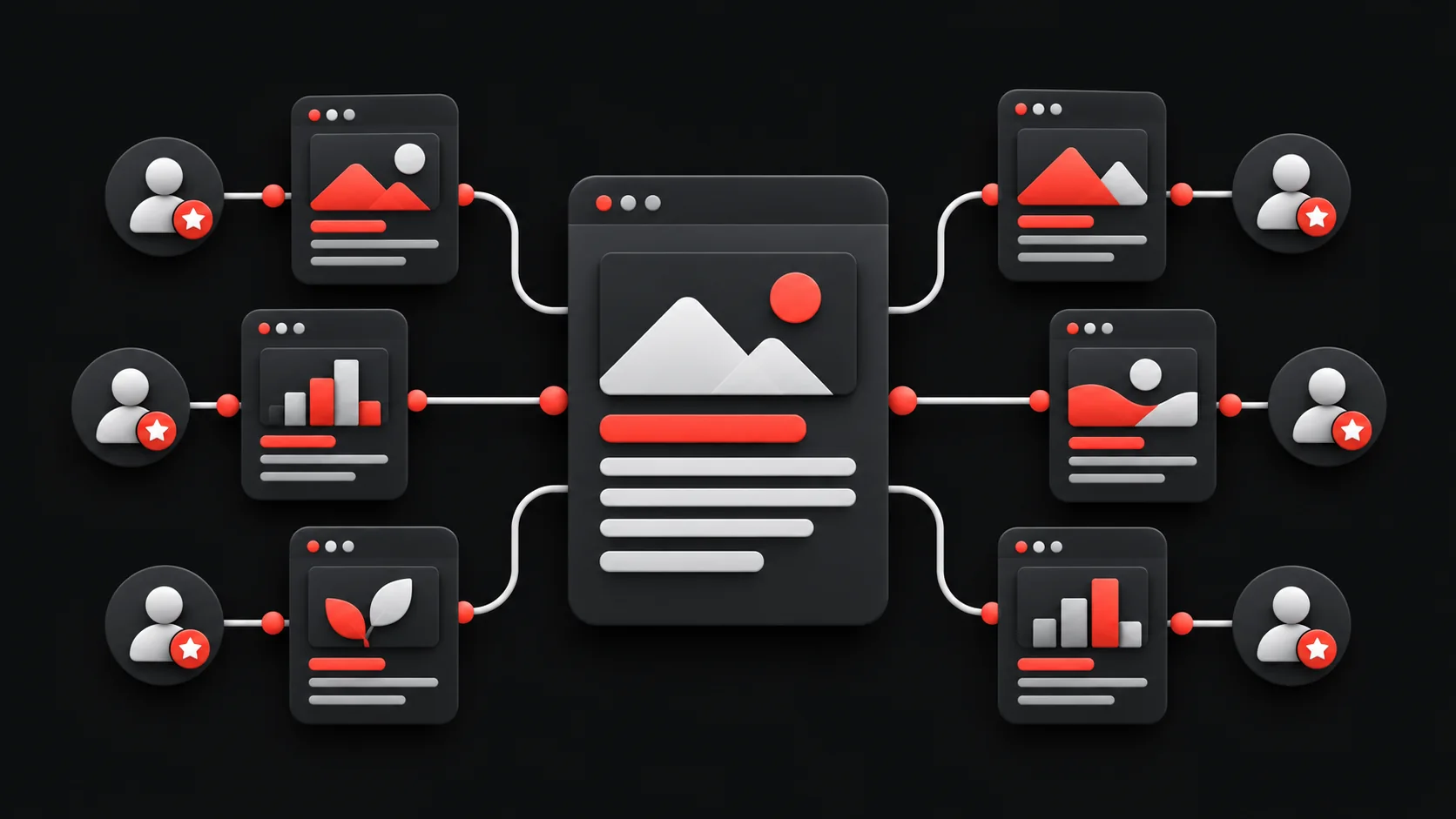
A strong blog post can become a LinkedIn post, an email, a carousel, a sales answer, a short video script and a landing page section.
SEO gives it long-term discovery. Social gives it distribution. Email gives it repetition. Sales gives it context.
That is content marketing: one clear idea doing useful work across the business.
06. What to measure
Measure movement, not noise.
Track rankings, enquiries, assisted conversions, internal link clicks, time on page, email replies and sales conversations where the content helped.
Page views are useful, but they are not the prize. The prize is a buyer who understands the value before they speak to you.
Need a content plan that connects to search? Start a project with us.
2026 update: types of content marketing, with small business examples
The four jobs above can be done in many formats. Oracle and Salesforce both list blogs, guides, email, video, social posts and case studies among the most common. The businesses below are illustrative examples, not clients.
| Format | What it does best | Illustrative small business example |
|---|---|---|
| Blog posts | Answers one specific question someone types into Google | A roofer writes "Do I need planning permission for a dormer?" |
| Guides | Covers a bigger decision in one place, worth bookmarking | A wedding venue publishes a planning checklist from engagement to the big day |
| Keeps you in front of people who are not ready yet | A garden centre sends a short monthly "what to plant now" email | |
| Video | Shows a process or a person, which builds trust quickly | A dog groomer films a short walkthrough of a puppy's first visit |
| Social posts | Puts ideas in front of people who follow and share you | A bakery posts the week's bakes and the story behind one of them |
| Case studies | Proves you have solved this problem before | A bookkeeper explains how a sole trader got their records ready for Self Assessment |
You do not need all six. Most small businesses do better with two formats done well: one that gets found (blogs or guides) and one that keeps in touch (email or social). If social is one of them, our guide to the best social media platform for your business helps you pick where to post. If you are starting an email list, these welcome email examples give you a first message to send new subscribers.
Content marketing vs advertising
Both aim to win customers, but they work in different ways. Salesforce describes traditional ads as "more overt sales pitches", while content marketing sets out to educate or help. The Content Marketing Institute makes the same point, contrasting useful content with material from companies "trying to sell first rather than help first".
| Advertising | Content marketing | |
|---|---|---|
| How people meet it | You pay to put it in front of them | They find it when they search, follow or subscribe |
| The message | "Choose us" | "Here is how to solve this" |
| When it stops working | When the budget stops | Keeps working while it stays useful and visible |
| Speed | Fast once a campaign is live | Slow to build, usually months |
They work best together: ads bring people to your best pages straight away, and good content gives them something worth reading. Content is also the raw material for SEO: Google can only rank answers you have actually written.
How content fits the buying journey
Oracle's guide says prospects need different content at each stage, from first research through to purchase, and cites Forrester research finding that 68% of B2B customers would rather research independently online. For a small business, a simple three-stage view is enough:
- Aware of the problem. They search the problem, not your service: "why does my boiler keep losing pressure?" Useful content: blog posts and short videos that answer it honestly.
- Comparing options. They know the kind of solution they need and are weighing it up: "combi or system boiler?" Useful content: comparison pages, guides and plain pricing explainers.
- Ready to choose. They are deciding who to use. Useful content: case studies, reviews, a clear service page and an FAQ on how booking works.
To find gaps, tag the last ten questions customers asked before booking as stage 1, 2 or 3. The stage with the fewest answers on your site is where to write next.
A simple 5-step content marketing plan for a UK small business
Salesforce sets out seven steps; for a small team, five cover it. Our post on what a content strategy includes goes deeper on the planning side.
- Pick one goal you can count. For example, more quote requests from the website, or more bookings in a quiet season. "Brand awareness" on its own is too vague to manage.
- Collect 20 real customer questions. Take them from emails, phone calls, reviews and the "People also ask" box in Google. These are your topics, in your customers' words.
- Choose two formats and a pace you can keep. For an owner writing their own content, one blog post or guide a month plus one email a month is a realistic start. A steady trickle beats a burst followed by silence.
- Publish once, use it three ways. Put the piece on your site, send it to your email list and turn the main point into a social post. Link it from the relevant service page so readers always have a next step.
- Review every quarter. Check which pieces led to enquiries, improve the ones that are close to page one, and drop any format that is not pulling its weight.
How to measure content marketing (enquiries, not just traffic)
Traffic tells you a page is being found. It does not tell you whether it is bringing in work. To connect content to enquiries:
- Set your contact form, phone clicks and quote requests as key events in GA4. You can then see which landing pages led to an enquiry. Our guide to GA4 vanity metrics explains which numbers to ignore.
- Ask every new enquiry how they found you. Add a "How did you hear about us?" field to the form and ask on the phone.
- Note assisted enquiries. Someone may read a guide, leave, and come back through Google Maps a week later. Record in your spreadsheet or CRM which pages people mention.
A simple monthly scorecard:
| Measure | Where to find it | What to look for |
|---|---|---|
| Enquiries from content pages | GA4 key events by landing page | Rising quarter on quarter |
| Impressions for target topics | Google Search Console | Rising before clicks do |
| "Found you through..." answers | Form entries and call notes | Content mentioned by name |
| Email replies and clicks | Your email platform | Replies, not just opens |
Realistic timescales
Content marketing is slow to start. Ahrefs studied newly published pages and found that only 1.74% reached Google's top 10 within a year in a sample of one million random URLs from 2023, or 6.11% in a filtered sample of English pages. Ahrefs also found the average page ranking first is five years old, and says pages that have not reached the top 10 after about six months have low odds unless the content is updated.
The table below is a rough guide based on those findings, not a promise:
| Timeframe | What to expect |
|---|---|
| Months 1 to 3 | Pages get indexed and appear in Search Console for a few specific questions. Email and social bring the first readers. |
| Months 3 to 6 | Some pages climb for less competitive questions. Spot the ones near page one and improve them. |
| Months 6 to 12 | A handful of pages bring steady visits and occasional enquiries. Rewrite or expand the ones that stalled. |
| Year 2 onwards | The library builds on itself. Older pages that are kept up to date are the ones that tend to hold top positions. |
Judge content marketing over a year, not a month, and keep updating what you have.
Sources for this section: What Is Content Marketing? (Content Marketing Institute), What is content marketing? (Smart Insights), What is Content Marketing? (Oracle UK), What Is Content Marketing? (Salesforce), How Long Does It Take to Rank in Google? (Ahrefs).
Frequently asked questions
What is content marketing in simple terms?
Content marketing is creating useful material, such as articles, guides, emails and videos, that helps potential customers before they buy. Instead of asking for the sale straight away, you answer their questions so they trust you when they are ready. The Content Marketing Institute describes it as content that attracts and retains a clearly defined audience and ultimately drives profitable customer action.
What are the main types of content marketing?
The most common types are blog posts, in-depth guides, email newsletters, video, social media posts and case studies. Oracle's guide also lists ebooks, infographics, podcasts and quizzes. For a small business, two formats done consistently usually beat six done occasionally.
What is the difference between content marketing and advertising?
Advertising pays to put a sales message in front of people, and it stops when the budget stops. Content marketing earns attention by being useful, so people find it through search, social or email, and a good piece can keep working for months or years. Most businesses get the best results using both together.
Is content marketing worth it for a small business?
It usually is, if you write about the questions your customers actually ask and give each piece a clear next step. It costs mostly time rather than ad spend, and the same piece can serve your website, email list, social channels and sales replies. It is less suitable if you need enquiries this month, where ads are faster.
How long does content marketing take to work?
Expect months rather than weeks. Ahrefs found only a small share of new pages reach Google's top 10 within a year, and the average page ranking first is five years old. Email and social can bring readers sooner, while search traffic builds slowly and keeps growing if you update your best pages.
How do I start content marketing?
Pick one measurable goal, such as more quote requests, then list 20 questions customers ask you before they buy. Answer the ones closest to a buying decision first, publish at a pace you can keep, and share each piece by email and social as well as on your site. Review what led to enquiries every quarter.
Thomas founded Your Digital Team to help businesses connect SEO, paid media, content and web development to measurable growth.
Meet Your Digital Team